A collection of practical tips and techniques for gardening in colder, northern climates. It offers valuable advice for Canadian gardeners - particularly in Atlantic Canada - as well as those in the northern United States, or anyone facing similar growing conditions.
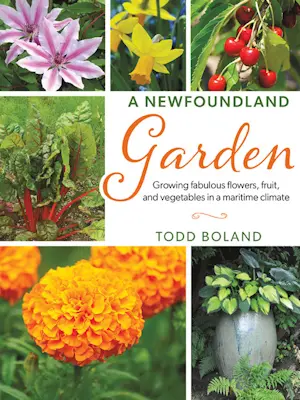
Gardening in Newfoundland comes with a distinct set of challenges, including erratic weather, variable seasons, and unique geology and soil conditions. But with the right knowledge and careful plant selection, beautiful and bountiful gardens are not only possible, but within just about everyone's reach.
In A Newfoundland Garden, author Todd Boland draws on four decades of hands—on gardening experience as well as his work at Memorial University's Botanical Gardens to deliver a beginner—friendly guide to designing, planting, and caring for your garden.

Acidic soils are widespread throughout North America, especially in humid regions or areas with high precipitation such as the eastern seaboard and the Pacific Northwest.
However, little assistance is available on how to garden specifically with acidic soils. In fact, most advice concerns how to make acidic soil less so. Todd Boland and Jamie Ellison take a different approach; they believe in working with nature, rather than trying to change it.

Tailored specifically to Atlantic Canadian gardeners, this is a must-have guide for the hundreds of perennials suitable to the often-challenging weather and soil conditions of Canada's east coast.

A beautiful, well-constructed guide to more than 130 of Newfoundland and Labrador's woody plants. Inside, you'll find icons that aid at-a-glance scanning of each species, tabs that show each plant's favoured habitats, photos of each plant's key features, and details to help you identify plants and broaden your knowledge.

Gardening in Newfoundland & Labrador can be challenging. But it can also be a highly rewarding and enriching experience. Expert gardener, Peter Scott, knows what plants grow best in this province, and how to make your garden lush and beautiful.
In this quick and easy guide, you will learn the basics of garden design and care. You will also learn how to grow vegetables, annuals, perennials, house plants, and more.
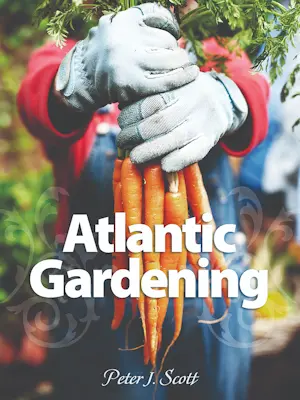
Gardening can be a challenge, especially in the unpredictable climate of Atlantic Canada. But it can also be a highly rewarding experience. This handy, easy to use book deals with shrubs and trees, perennials, bulbs, annuals, vegetables, lawn and garden preparation, houseplants, and other important gardening issues.

In this guide to over five dozen edible plant species that grow in the North Atlantic climate, biologist Peter J. Scott provides a wealth of information about each of them. his easy-to-use guide includes the habitats in which each can be found, basic recipes, a glossary, and references so that you, too, can enjoy the bounty that exists outside the door.

In this guide to over five dozen edible plant species, Peter J. Scott provides a wealth of information about each of them. His easy-to-use guide includes the habitats in which each can be found, basic recipes, a glossary, and references so that you, too, can enjoy the bounty that exists outside our doors.

Over the centuries, people living in Newfoundland and Labrador have demonstrated remarkable resourcefulness in order to reap the bounty of both sea and land. However, despite renewed interest in traditional Newfoundland and Labrador meals, the reality is that many cannot attain healthy and affordable food. Food Futures explores the origins, present day complexities, and future of the Newfoundland and Labrador food system. This uniquely interdisciplinary collection draws from the research of 24 scholars in disciplines ranging from anthropology to biology. Collectively, the authors offer a vision for a sustainable food system that meets the dual goals of achieving food security and food sovereignty for all.
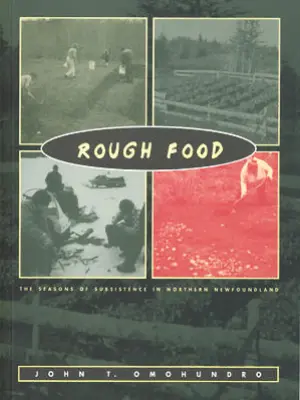
Rough food is your staples, your Winter's diet. The things you got in the Fall to see you through 'til Spring.” This book details how and why northern Newfoundlanders have lived off the land, as unyielding as it is, for a significant proportion of their food, shelter and fuel. Omohundro documents the self-sufficient dimension of rural life and examines recent changes, looking towards future developments.

Cows Don't Know It's Sunday gives a historical overview of farming and its importance to the economy of Newfoundland, and describes in detail, using the words of more than eighty people who grew up on or near farms, what it was like to farm in and around St. John's in the period within living memory. Farmers worked seven days a week throughout the year. This study of both the work life and social life of the farmers of St. John's is a tribute to the farming families who were the mainstay of the city during the first half of the twentieth century.
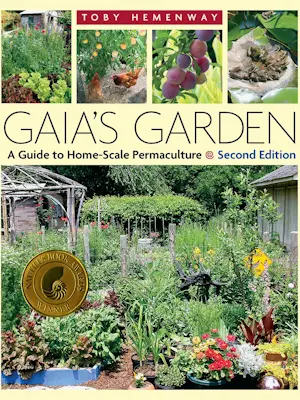
The first edition of Gaia’s Garden sparked the imagination of America’s home gardeners, introducing permaculture’s central message: Working with Nature, not against her, results in more beautiful, abundant, and forgiving gardens. This extensively revised and expanded second edition broadens the reach and depth of the permaculture approach for urban and suburban growers.
This revised and updated edition also features a new chapter on urban permaculture, designed especially for people in cities and suburbs who have very limited growing space. Whatever size yard or garden you have to work with, you can apply basic permaculture principles to make it more diverse, more natural, more productive, and more beautiful. Best of all, once it’s established, an ecological garden will reduce or eliminate most of the backbreaking work that’s needed to maintain the typical lawn and garden.

The Community Food Forest Handbook provides readers with helpful ideas for building and sustaining momentum, working with diverse public and private stakeholders, integrating assorted civic interests and visions within one project, creating safe and attractive sites, navigating community policies, positively affecting public perception, and managing site evolution and adaptation. Its concepts and examples showcase the complexities of community food forests, highlighting the human resilience of those who learn and experience what is possible when they collaborate on a shared vision for their community.
Diana Sammataro and Alphonse Avitabile have revised and expanded their clear and comprehensive guide to cover changes in beekeeping. They discuss the crisis created by the parasitic bee mites. In less than a decade, for example, Varroa mites have saturated the North American honeybee population with disastrous results, devastating both managed and wild populations. This fourth edition has been thoroughly redesigned, expanded, updated, and revised to incorporate the latest information on Colony Collapse Disorder, green IPM methods, regional overwintering protocols, and procedures for handling bees and managing diseases and pests such as African honey bees and bee mites.
Gene Kritsky offers a concise, beautifully illustrated history of beekeeping, tracing the evolution of hive design from ancient Egypt to the present. The book contends that beekeeping's long history may in fact contain clues to help beekeepers fight the decline in honey bee numbers. Indeed, while we have sequenced the honey bee genome, we still keep our bees in hives that have changed little during the past century. If beekeeping is to survive, Kritsky argues, we must start inventing again. We must find the perfect hive for our times.

Honey bees have been described as exceptionally clever, well-organized, mutualistic, collaborative, busy, efficient - in short a perfect society. While the colony is indeed a marvel of harmonious, efficient organization, it also has a considerable dark side. When one looks carefully, the honey bee colony is far from being perfect. As with any complex social system, honeybee societies are prone to error, robbery, cheating, and social parasitism. Nevertheless, the hive gets by remarkably well in spite of many seemingly odd biological features. The perfection that is perceived to exist in the honeybee's social organization is the function of a focus on the colony as a whole rather than exploring the idiosyncrasies of its individual members. The Dark Side of the Hive thus focuses on the role of the individual rather than that of the collective. The story told about these dark sides of the colony spans the full range of biological disciplines ranging from genomics to systems biology.
Without fresh, all-natural winter gardening in the seventeenth, eighteenth, and nineteenth centuries people would have starved to death. The good news is that feeding your family fresh food from your own backyard garden all winter long is far easier and less time-consuming than you might imagine. And you won’t find better-tasting food at any price!

Shares simple gardening techniques that save time and effort and yield an abundant crop by utilizing the power of a garden's natural growing patterns

Planting your own garden can cut down your grocery bill, but few people have the time to cultivate a big harvest every year. Self-sufficiency expert Caleb Warnock shares his expertise in creating a permaculture food forest: a garden that you plant once and then leave in the hands of Mother Nature for years to come. Best of all, this natural, sustainable, and low-maintanance garden can succeed in any climate, and Growing a Permaculture Food Forest can show you how.
When you plant the right varieties of heirloom vegetables, you can harvest huge volumes of fresh food from small garden plots and container gardens. Self-sufficiency expert Caleb Warnock provides step-by-step directions for designing, planting, and harvesting a tiny garden for big harvests that can really feed your family.
Tired of tilling your garden? Why till when Mother Nature can do it for you, saving you time and money? Caleb Warnock, self-sufficiency expert and author of the Backyard Renaissance Collection, provides a foolproof method to toss your tiller and have the best garden in the neighborhood.

Self-sufficiency expert Caleb Warnock shares his expertise on living off the land in 276 Edible Wild Plants of the United States and Canada. Packed with over 800 photographs of over 250 wild berries, roots, nuts, greens, and flowers, this valuable reference will show you which plants are edible, where to find them, how to prepare them, and how to avoid poisonous look-alikes. With a focus on plants found throughout the United States and Canada, it's the most exhaustive reference book of its kind!

HTML Creator